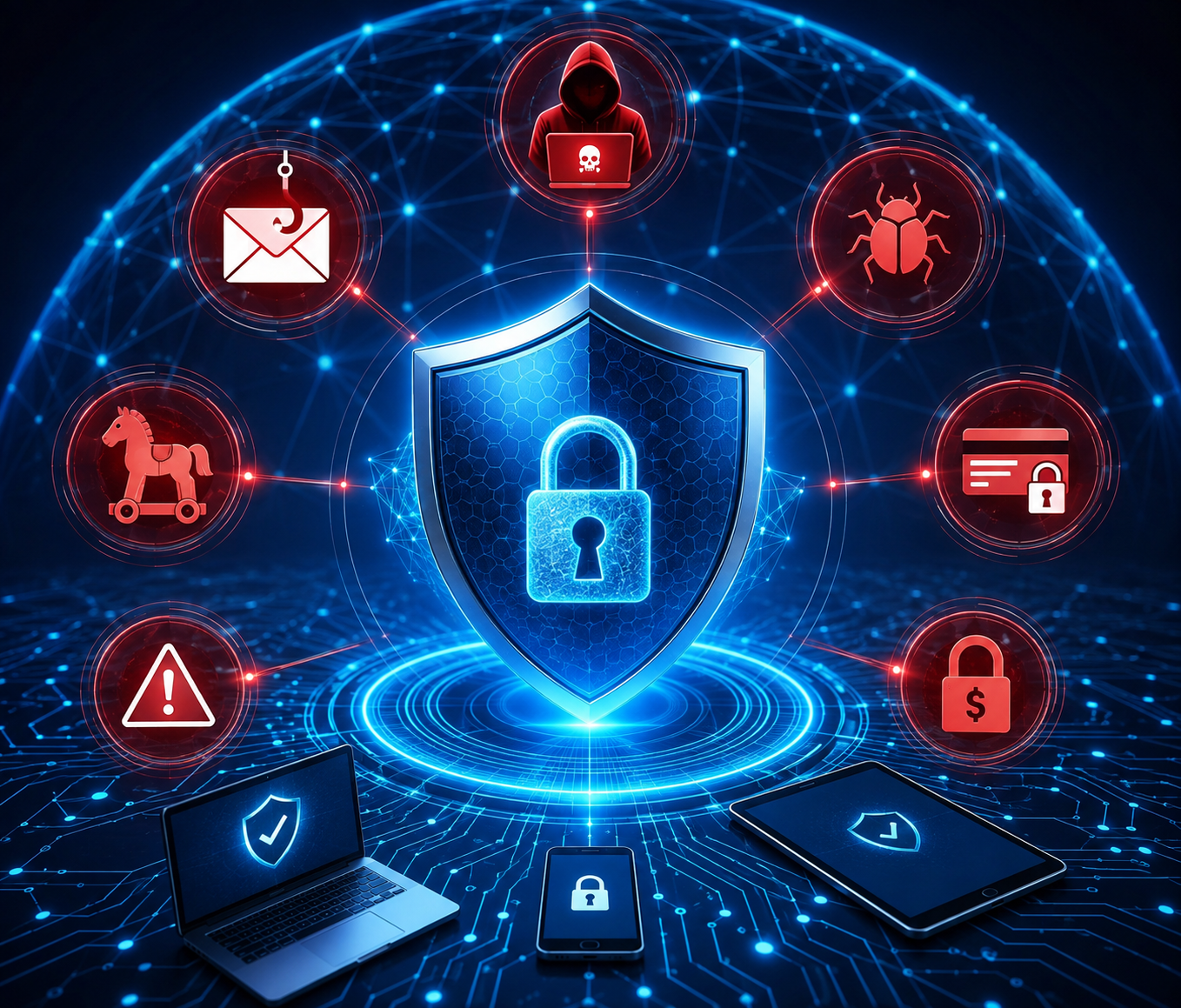
One of the top cybersecurity threats to modern businesses is phishing and social engineering attacks. In addition to exploiting software vulnerabilities, criminals often exploit employees to divulge sensitive data, click links in email messages, download malware, or wire transfers. With businesses relying on email, cloud-based platforms, remote work and digital communication more than ever before, the ability to stop these attacks has become a crucial component in cybersecurity.
What Are Phishing and Social Engineering Attacks?
Phishing is a cybercrime where criminals attempt to deceive somebody into handing over their personal information or taking an unsafe action through a fake email, message, website or the like. The attacker can pretend to be a bank, software company, customer, manager or a business partner.
Social engineering is a much more general approach that deals with more with people than with technology. Attackers can use urgency, fear, authority or trust to manipulate the employees to alter normal security procedures.
For instance, a worker could be sent an email from a company representative asking for an immediate payment. Another employee may receive an e-mail with a false password reset link and be redirected to a phishing site.
Why do Businesses Get Targeted for these Attacks?
Valuable information is being managed by businesses such as customer information, financial data, employee records, intellectual property, login credentials and internal documents. The data can be used to make money for the cybercriminal.
Humans also play a big role. Employees with cybersecurity awareness can make errors when exposed to persuasive messages or appeals to action. Attackers constantly refine their methods and speed up the production of impersonations by incorporating realistic branding, using trojans containing personalized information, through fake websites and using artificial intelligence to make the communications more convincing.
Employee awareness, security technology, policies and continuous monitoring are necessary to mitigate these risks.
What does Employee Security Awareness Training offer?
One of the best methods to reduce phishing risks is through regular cybersecurity awareness training. Staff need to be trained to identify suspicious emails, links, attachments, messages and requests.
It is important that training is provided to explain the following common warning signs:
- Inappropriate password requests or financial details.
- Messages that need to be taken down right away.
- Emails from suspicious addresses or domains.
- Attachments or links that are not normal.
- Political appointments to the Company’s executive committee
- Negative messages based on fear/pressure
- Unexpected password-reset notifications
Training should not be restricted to one presentation a year. Brief, frequent learning sessions can ensure that employees retain security procedures and can adjust to new attack techniques.
Why Should Businesses Use Multi-Factor Authentication?
If a user’s credentials are compromised via phishing, then using passwords alone might not be enough to offer protection. Multi-factor authentication involves using an extra piece of information, which increases security.
This may be by means of an authentication application, security key, biometric verification, or other acceptable means depending on the system.
If a hacker does manage to find the username and password, adding another layer of protection can make hacking more difficult.
Multi-factor authentication, which combines two or more methods to verify a user’s identity, is a critical component of email, administrative, cloud, remote-access and other crucial applications that should be prioritized by businesses.
How Can Email Security Tools Reduce Phishing?
Modern email security solutions can help defend against and block suspicious email from reaching employees. These systems can examine sender details, links, attachments, message patterns, domains and more to determine if the messages are malicious.
Spam filters, domain protection, malware detection and link-scanning are other technology tools that businesses can employ to minimise the threat posed by dangerous content.
But technology is not to supplant employee awareness but to complement it. Fortunately, there are also some highly advanced phishing messages that will evade automatic filtering, so human judgment is a critical extra line of defense.
The Importance of Having Good Password Policies
Businesses need to have a clear policy on password security. Employees should never re-use passwords for other accounts and should have strong, unique passwords.
To ensure that employees can easily make and remember unique passwords without the help of a password manager.
Additionally, organizations should also safeguard privileged accounts as if they are compromised, they can gain access to sensitive systems and information.
How to Identify Suspicious Requests in Business?
Staff members must be encouraged to check odd requests themselves, especially requests for money, credentials, confidential information or alteration of payment information.
If they have an odd request from a manager, for instance, to move money between accounts, they should confirm this by contacting the manager through a different method, not just responding to the initial message.
Businesses are able to set up validation procedures around sensitive actions. Such processes can stop an attacker from exploiting urgency, or pretending to be a top-level employee.
What is the Reason for a Business to Run Phishing Simulations?
Organized phishing exercises can help to see how staff reacts to phishing messages. A company can send simulated phishing messages and track the reactions of employees to them.
The intent should be to educate, not punish. If an employee makes an error, he/she should be provided with extra guidance and training.
The simulated results can also identify areas for enhancing security awareness. Organizations can then tailor their training to fit the needs.
How are Businesses Going to Keep Remote and Hybrid Employees Safe?
Employees working remotely have the potential for further risks as they are often on networks at home, using personal devices, and work in environments that are different from what they are used to. Businesses need to have explicit policies on remote working security.
Employees are expected to use approved devices, secure connections, current software, and security tools (where applicable) that are managed by the company. Appropriate authentication and access control should be used to protect access to business applications.
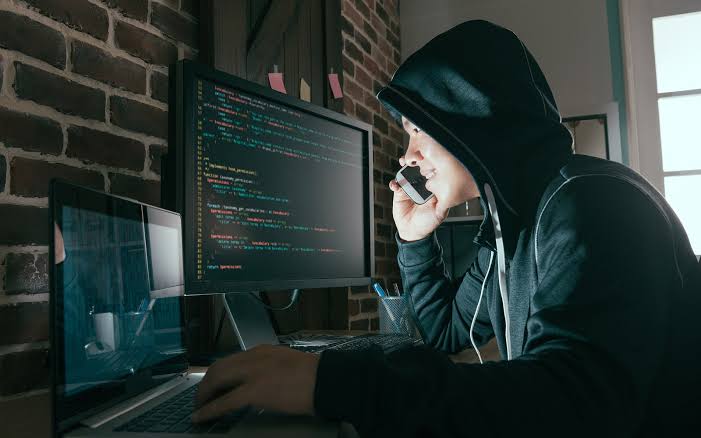
Also, employees need to be aware that attackors can use collaboration tools, text messages, social media and telephone calls in addition to standard e-mail to attempt a social engineering attack.
So What is the Role of Access Control?
The principle of least privilege should be followed in the business: Only access should be granted to employees that is needed for their job.
Restricting access decreases the impact of a compromised account. If an employee’s credentials are stolen, then the chances of reaching sensitive systems are reduced.
User permissions and access needs should be routinely reviewed and access restrictions should be put in place when a user’s role changes or they leave an organization.
Creating a Good Security Culture Among Businesses
Cybersecurity is not only the responsibility of the IT department. All staff members are responsible for safeguarding the company’s information.
It is important that employees are able to report any suspicious messages without fear of blame being placed. Timely reporting allows security to investigate a threat, give alerts to other employees and take protective measures.
It is important that businesses also have an incident response plan in place to make sure that employees and security personnel know what to do in the event of a phishing or social engineering incident.
Conclusion
By fostering employee awareness, implementing robust technical measures, and establishing clear security protocols, businesses can greatly limit the likelihood of falling victim to phishing and social engineering attacks. Awareness training, multi-factor authentication, email security, robust password usage, verification measures, phishing simulations, access controls and timely incident reporting help to improve protection.
The intent is not for workers to catch all attacks exactly. Rather, companies must have several layers of protection, with one failure not triggering a large security breaching. By helping organizations safeguard data, employees, customers, and reputation against ever-changing social engineering attacks, a proactive cybersecurity culture contributes to a healthy organization.A healthy organization has a proactive cybersecurity culture which helps organizations to protect their data, employees, customers, and reputation from ever-changing social engineering attacks.