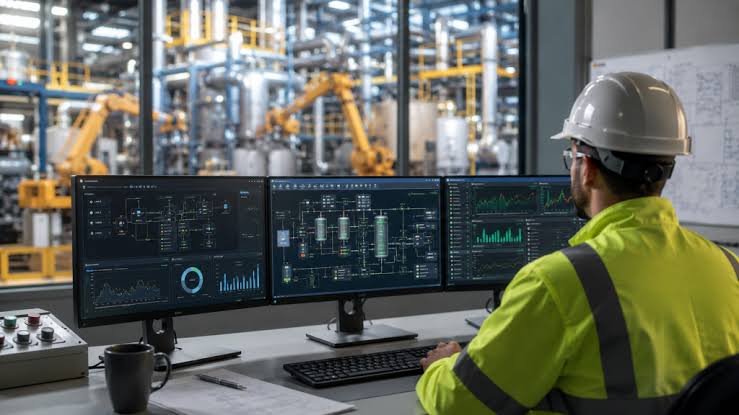
Industrial Operational Technology (OT) Cybersecurity is an urgent priority to preserve the safety, security, and reliability of the operational systems that run critical infrastructure, such as industrial sites, manufacturing plants, energy networks, transportation systems, healthcare environments, etc.
The physical processes, machinery, equipment and industrial operations in OT environments are directly controlled by the system, whereas in traditional IT systems, these elements are not directly linked to the system, but may be influenced by it. An attack on these systems can thus result in data loss as well as production delays, equipment damage, safety incidents, and financial losses.
Artificial Intelligence (AI) is becoming more and more integral to the field of current OT cybersecurity due to the increasingly sophisticated nature of cyber threats. AI can sift through vast amounts of data from operations, flagging unusual activity, assisting with quicker detection of threats, and aiding security teams in the event of a potential attack. AI can bolster an OT security strategy when used responsibly and provide continuity of operations for organizations.
Understanding AI in OT Cybersecurity
Artificial Intelligence is a term used to describe technologies that are able to process information, recognize patterns, make predictions, and aid automated decision-making. In the cybersecurity world, AI systems can analyse network traffic, system logs, device behavior, user activity, and other security signals.
AI can be especially useful in OT environments, where industrial networks can be thousands of devices and have complex patterns of communication. Handling all devices and detecting subtle changes in behaviour can be a challenge for security teams.
AI-driven cybersecurity solutions can set up a normal pattern and then conduct a comparison of new activity to that normal pattern. If there’s unusual behaviour, the system can generate an alert for further investigation.
AI-Powered Threat Detection
One of the most important applications of AI in OT cybersecurity is threat detection. Standard security tools tend to rely heavily on pre-established rules or on a list of known attack signatures. These methods are still effective but might not detect new or unknown threats.
Unlike using signatures alone, AI/machine learning models can analyze the behavioral patterns. For instance, an industrial controller should be communicating with one specific set of devices, but suddenly starts communicating with an unfamiliar system, an AI based security platform might notice the difference and raise an alarm.
This method can enable security teams to detect suspicious behavior sooner and research any potential threats before they turn into significant incidents.
Identifying Anomalies in Industrial Networks
In OT, an anomaly detection is particularly crucial because an unusual activity may be due to a cyberattack or an operational issue.
AI systems can monitor factors such as:
- Network communication patterns
- Device behavior
- Login activity
- Command sequences
- Process variables
- Data transfers
- System performance
- Connectivity of industrial assets
AI can learn to recognize abnormal operations, which might otherwise go unnoticed, by its knowledge of what normal operations are. This can assist organizations identify unauthorized access, malware activity, unusual commands, and possibly even a compromised device.
Faster Incident Response
The first step in cybersecurity is to identify a threat. Organizations need to take quick action as well. Lack of timely reaction can enable an attack to roam on the network, defraud or interfere with systems.
AI can assist with security team prioritization of alerts based on severity, impact on assets, unusual behavior, and impact to operations. Security analysts can prioritize alerts and concentrate on the ones that pose the biggest threat.
However, with the help of AI, some low-risk measures can be automated, including isolating suspicious endpoints, blocking malicious communication or escalating critical alerts to security staff. In OT environments, however, automated actions need to be well managed as an incorrect action could negatively impact a physical process.
Predictive Cybersecurity and Risk Management:
Predictive Cybersecurity: This is another crucial application of AI in the field of security. Instead of merely reacting to incidents, AI can proactively detect potential risks before they turn into major issues.
Machine learning systems can process information on past security events, device activity, vulnerabilities, and network traffic to detect patterns that can be linked to potential threats. This data can then be leveraged to guide security teams in prioritizing vulnerability management and enhancing defensive strategies.
For instance, an organisation can leverage AI to identify industrial devices that are most vulnerable to the threat of suspicious activity and should be addressed urgently.
Protecting Legacy OT Systems
Many industrial environments continue to use legacy equipment that was designed many years before the advent of widespread cyber security threats. Replacing these systems can be costly, complex and disruptive.
AI can be used to complement legacy systems and doesn’t necessarily need to involve changing the underlying equipment. AI-powered security solutions can detect suspicious activity around systems with minimal built-in security, by watching network traffic and device behavior.
For industries such as manufacturing, utilities, energy and others where old equipment continues to be in use for a long period of time, this can be very beneficial.
Understand how to minimize security alert fatigue.
Security teams can get numerous alerts from multiple monitoring tools. It can take a long time to review each alert individually and could result in ‘alert fatigue’.
AI can be used to analyze multiple signals simultaneously and filter and prioritize security events. AI systems can uncover patterns in the relationships between notifications and flag potentially unusual activity to analysts, rather than inundating them with thousands of individual alerts.
This enables people in the cybersecurity field to dedicate more time to studying significant threats and less time to studying routine events.
AI and OT Asset Visibility
Having an understanding of the devices present in an OT environment is a key aspect of cybersecurity. Programmable logic controllers, sensors, human-machine interfaces, industrial computers and servers, network devices and other specialized equipment can be present in organizations.
AI can help in identifying and categorizing assets based on the nature of interactions and device attributes. Improved visibility of assets means that security teams can see which assets are connected, how they talk to each other and which assets might need extra protection.
This data can be used to improve network segmentation, vulnerability management, and security monitoring.
Discover the obstacles of implementing AI in OT security
AI may have great benefits, but it cannot be a full cybersecurity solution for organizations. No AI model is accurate, and they don’t always work right, depending on the data they have to work with.
There are unique requirements for OT environments as well. Security measures should not have an unintended impact on production or safety critical operations. This is why it is important for organizations to thoroughly evaluate and test AI-powered security solutions before implementing automated responses.
There is still a need for human expertise. Security professionals have insight into operational processes, equipment requirements, safety requirements, and business priorities that may not be comprehensively understood by an AI system.
Additionally, organizations must safeguard AI systems themselves, as attackers could try to manipulate or gain access to information, or exploit vulnerabilities in AI-based security platforms.
Best Practices for Implementing AI in OT Security
To implement AI for OT cybersecurity, it’s best to start with a solid foundation. They should keep an accurate inventory of assets, segment critical networks, provide proper network access controls, track network activity, and ensure that network assets have proper backup and recovery plans in place.
AI needs to then be part of the larger cybersecurity strategy. Monitoring and anomaly detection are an excellent way to begin on the path to more advanced automation.
It is also vital to regularly test the models. AI systems need to adapt to changes in OT environments while avoiding misidentifying legitimate changes as threats.
Most critically, there has to be a collaboration between cybersecurity teams and the OT professionals. However, by bringing security experts, engineers, operators, and management together, it is possible to make sure that while AI is making protection better, it does not affect reliability or safety.
The Future of AI in OT Cybersecurity
AI is likely to play an even bigger role in OT cybersecurity. The amount of security data will keep increasing as industrial spaces start to become more connected with Industrial Internet of Things (IIoT) technologies, the cloud, remote monitoring, and smart automation.
AI can assist organizations to analyze this information at scale, identify suspicious behavior, predict potential risks, and aid in quicker decision-making. Moving forward, a new generation of cybersecurity platforms could integrate with AI, behavioral analytics, threat intelligence, digital twins, and automated security operations.
The best strategy, however, is to use a combination of strategies. The role of AI is to support and complement human knowledge, not to replace it. Businesses that integrate intelligent security solutions, have a robust governance framework, trained experts, network segmentation, ongoing monitoring and a well-defined incident response plan will be better equipped to safeguard their critical OT environments.
Conclusion
AI is revolutionizing modern OT cybersecurity with enhancements in threat detection, anomaly identification, risk assessment, asset visibility and incident response. It is also known for its ability to process vast amounts of data and identify patterns that are not typical, which is why it is so beneficial in industrial environments with complex processes.
However, the use of AI needs to be done with caution. Operations and safety are directly impacted by security decisions in OT cybersecurity, impacting both physical and digital systems. Effective strategy is a mix of AI monitoring, humans and good cybersecurity.
With the growing connectivity and complexity of industrial systems, AI is likely to play a significant role in supporting organizations to develop more proactive, resilient, and responsive OT cybersecurity programs.