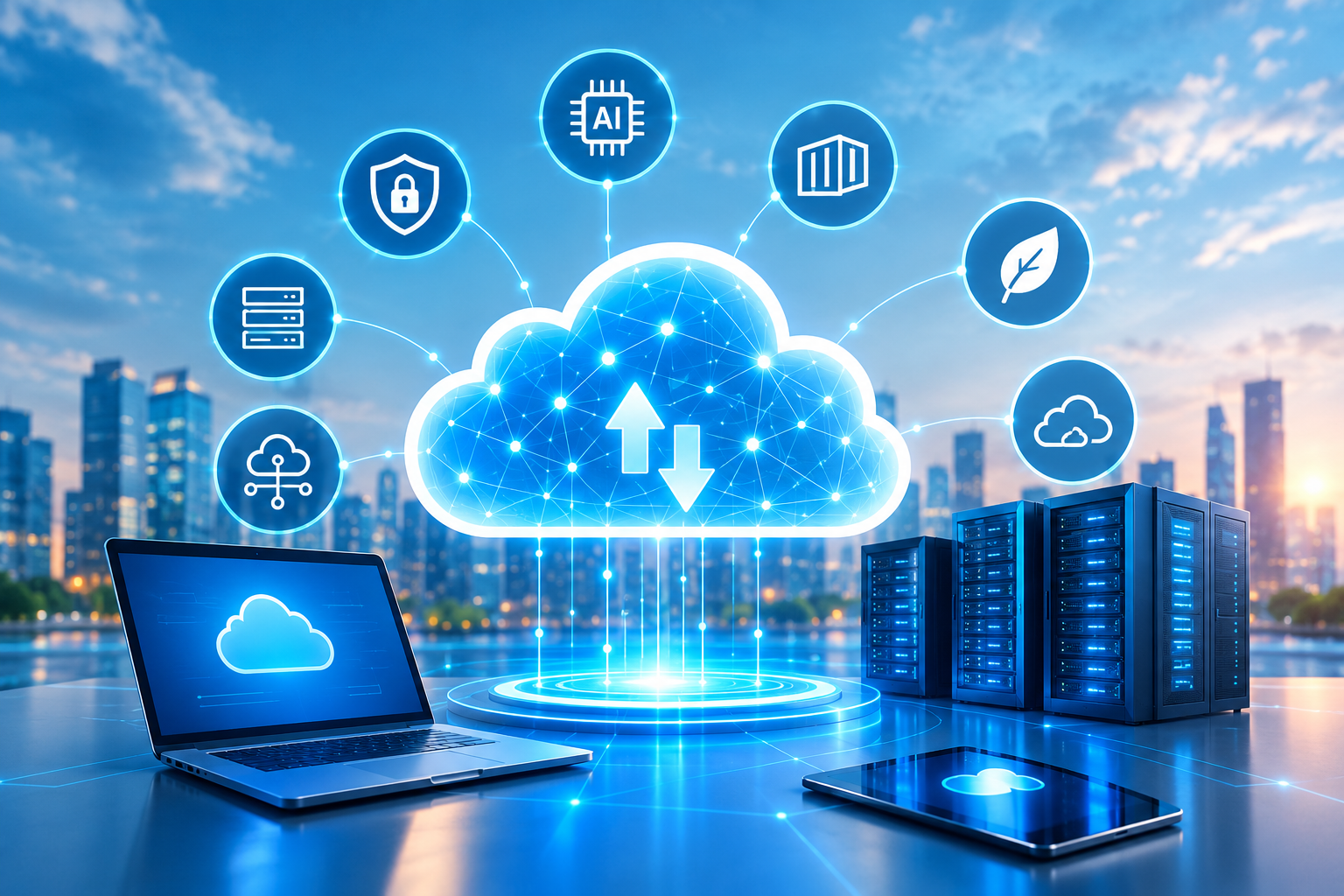
Cloud computing is among one of the most vital technologies that are leading the digital transformation across industries. Whether it is small businesses or big enterprises, organizations are using cloud platforms to store information, manage applications, enhance collaboration, and drive modern business operations. Cloud Computing is going through another new era of innovation in 2026, with the advancement of technology.
How businesses are applying cloud services is transforming with the rise of artificial intelligence (AI), automation, cybersecurity solutions, and advanced data analysis. Businesses are going beyond cloud migration to intelligent, flexible and cost-effective infrastructure.
Cloud computing is becoming a core component of enterprises’ innovation and AI-driven applications, research indicates. These advancements are opening avenues for businesses to optimize their operations and stay competitive in today’s ever-evolving digital landscape.
1. Artificial Intelligence and Cloud Computing Integration
AI is one of the most significant developments in the cloud computing landscape this year that will continue to evolve in 2026. Cloud platforms provide the computing power, storage, and infrastructure required to develop and operate AI applications.
Companies are leveraging cloud-based AI solutions to streamline repetitive tasks, process vast amounts of data, enhance customer journeys, and aid decision-making.
The term ‘intelligent’ is also being applied to AI-powered cloud services that are helping organizations develop sophisticated applications without making huge investments in physical infrastructure. This enables startups, small businesses, and established companies to access advanced technology.
Cloud computing and AI will continue to be powerful technology innovations in 2026.
2. Increased Adoption of DevOps Practices
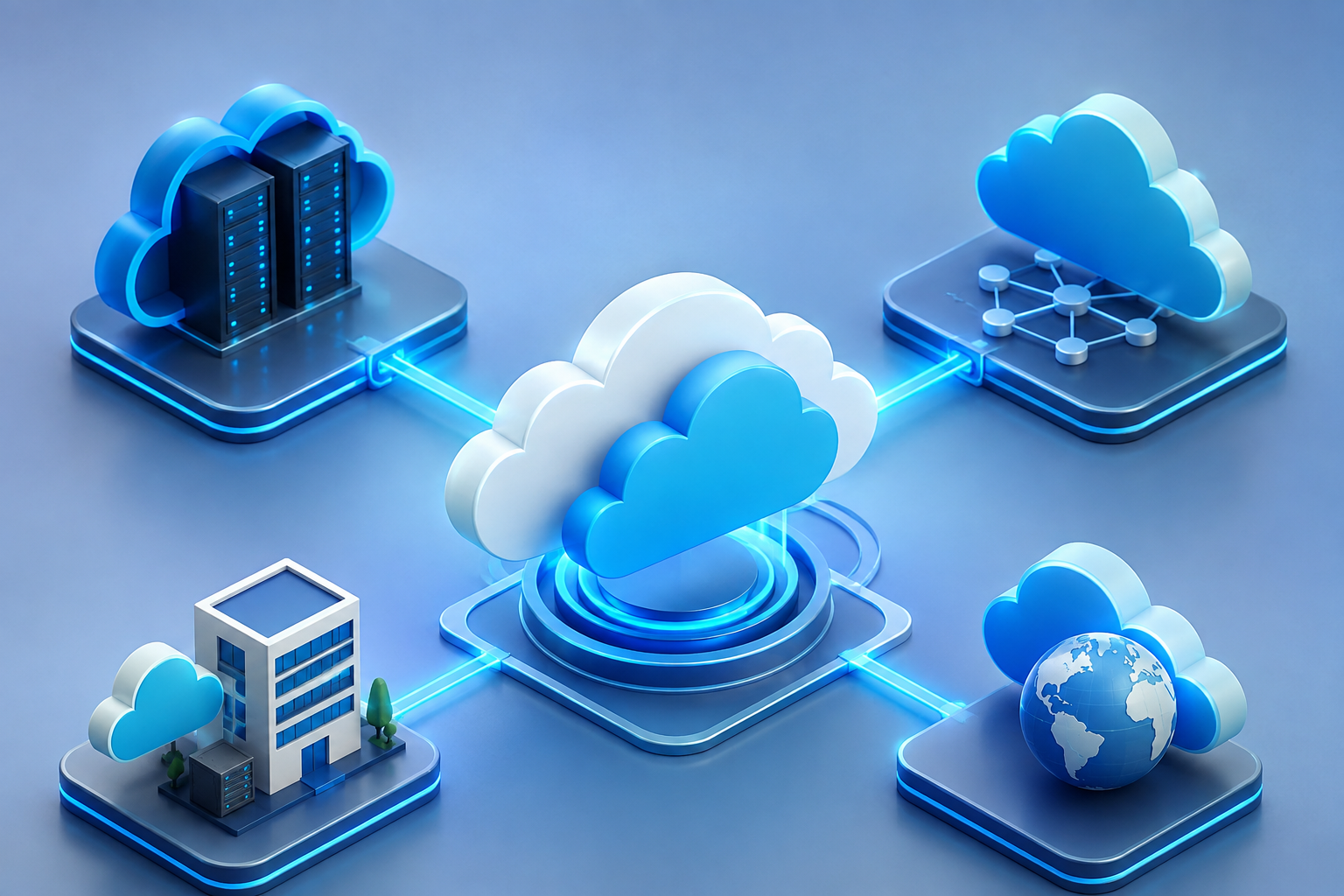
Many businesses today are turning to hybrid and multi-cloud solutions. A hybrid cloud model involves using a private and public cloud while a multi-cloud approach is the use of services from more than one cloud provider.
Organizations can make use of these methods to decide on the best environment for various workloads.
An enterprise can host the private cloud for its sensitive customer data, and public cloud resources for application development, testing, and applications processing.
The significant advantages are:
- The ability to schedule more flexible workloads.
- Business continuity and disaster recovery benefits.
- Reducing reliance on a single cloud provider.
- Improved access to sensitive data.
- Additional ways to control performance and costs.
The landscape of cloud architecture choices is changing, with enterprises prioritizing options that align with their unique requirements and security strategies in 2026.
3. Cloud Security and Zero Trust Architecture
Cybersecurity is a huge issue as organisations start to shift more applications and data to the cloud. Cloud environments can be vulnerable to unauthorized access, data breaches, misconfigured resources and malicious attacks.
Businesses are implementing sophisticated cloud security solutions and Zero Trust Architecture to help overcome these challenges.
The Zero Trust approach is based on the principle of never trust, never assume. Access should be checked for identity, permissions and security policies for every access request.
Some of the modern security practices that include in cloud computing are:
- Multi-factor authentication
- It is also known as identity and access management.
- Data encryption
- Continuous security monitoring
- Automated threat detection
These measures protect organizations’ critical information and secure access to cloud-based applications.
4. Serverless Computing & Cloud Automation
Another cloud technology trend that’s changing the game is serverless computing. It enables developers to deploy applications and functions without having to manage the servers themselves.
Cloud providers take care of provisioning, scaling and maintenance of infrastructure. Companies can dedicate more attention to software applications and services.
There are many applications that have varying workloads, and in those instances, serverless architecture is helpful. It can be used to power websites, automation processes, data handling, and application connections.
Cloud automation is also augmenting efficiency within an operation by minimizing manual work. Resource allocation, deployment of applications, application backups, application performance monitoring can be done with automated systems.
These features enable enterprises to save time and make sure their digital offerings are more predictable and reliable.
5. Edge Computing and Real-Time Data Processing
Edge computing has been attracting more attention as more modern applications demand faster data processing and low latency.
Edge computing processes data nearer to where it is created rather than sending all of the information to a faraway cloud data center.
It is beneficial for industries like manufacturing, healthcare, transportation, and smart cities.
For example, connected industrial equipment can be used to process information locally – identifying performance issues quickly. Smart transportation systems can process the traffic data in real-time and provide real-time analysis to support transportation management.
Cloud computing and edge computing complement each other to deliver scalable infrastructure and applications with fast responses.
6. Cloud-Based AI/ML and Automation
Cloud services are flexible, but it can be difficult to keep track of the cost of cloud spending as more cloud applications and advanced services are used.
Optimizing cloud costs and implementing FinOps practices are the top concerns for businesses in 2026, driving a push for greater financial visibility and accountability.
FinOps is the merging of Financial Management and Cloud Operations. It enables organizations to see how resources in the cloud are being utilized and if spending is yielding value to the business.
To maximize cloud costs, businesses can:
- To discover unused cloud resources
- Monitoring application usage
- Choosing the right service plans
- Automating resource scaling
- Regularly reviewing cloud spending
With effective cost management, organizations can strike a balance between innovation, performance and profitability.
7. AI-Optimized Cloud Infrastructure
As AI applications grow in number, cloud vendors are building infrastructure to support heavy workloads.
AI-optimized infrastructure involves dedicated processors, sophisticated networking, high-speed storage, and scalable computing capabilities.
The technologies enable AI model training, inference, data analytics, and intelligent automation.
AI-integrated cloud solutions enable enterprises to create applications that process data, produce text, aid in customer support, and automate intricate processes.
The future of cloud infrastructure is bright as it moves forward to meet the growing demand for more computation and demanding workloads in the era of AI.
8. Data Sovereignty and Sovereign Cloud Solutions
With the rising significance of cloud computing, data protection and regulatory compliance are growing in importance.
There may be specific requirements for where data is stored, processed and managed, depending on the organizations operating in various countries.
Sovereign cloud solutions enable enterprises to have more control over data access, data location and data governance.
Such solutions are especially pertinent for sectors like banking, health, government, and education, where data is frequently more sensitive and demands further safeguarding.
As 2026 approaches, cloud providers are now being assessed beyond their performance and pricing capabilities, but also based on their compliance with data protection and regional regulations.
9. The Future of Cloud Computing in Business
Cloud computing is expected to continue to be a key component of business technology. Cloud platforms will be smarter and more flexible as AI, automation, edge computing and cyber security keeps progressing.
By leveraging cutting-edge cloud technologies, organizations can streamline their operations, foster innovation, and adapt to evolving market needs.
But, as with any other technology, there is a need for careful planning to make the adoption of the cloud successful. Businesses need to consider things like business requirements, security needs, resources at their disposal and future technology goals when choosing a cloud strategy.
Conclusion
These are the top cloud computing trends for 2026, signaling a move towards intelligent infrastructure, enhanced security, automation, and flexible deployment options. The advent of AI integration, hybrid cloud, edge computing, serverless technologies, and cost optimization is transforming the way organizations handle their digital operations.
Cloud computing will serve as a vital element in sustaining growth and digital innovation for businesses in the future, as technology continues to advance. By leveraging the right cloud strategies, organizations can create more secure, efficient, and scalable systems for the future.